English (EUR)
 Česky (CZK)
 Deutsch (EUR)
 Austria (EUR)
 Polski (PLN)
 Français (EUR)
 Español (EUR)
 Italiano (EUR)
 Română (EUR)
 Ελληνικά (EUR)
 Dutch (EUR)
 Eesti keel (EUR)
 Português (EUR)
 Magyar (EUR)
 Svenska (EUR)
 Dansk (EUR)
 Suomen kieli (EUR)
 български език (EUR)
 Slovenščina (EUR)
 Slovensky (EUR)
 lietuvių kalba (EUR)
 latviešu valoda (EUR)
 Hrvatski (EUR)
 українська мова (EUR)
 Bahasa Indonesia (EUR)
Hemp oil vs. CBD oil: Everything you need to know
- What is hemp oil (hemp seed oil) and how is it made?
- Is hemp oil the same as CBD oil?
- What is hemp oil good for?
- Hemp oil vs. CBD oil for anxiety
- Hemp oil vs. CBD oil for pain
- Conclusion
- FAQ
What is hemp oil (hemp seed oil) and how is it produced?
Hemp oil is a vegetable oil cold-pressed from hemp seeds, small "nuts" that contain a wealth of nutrients for our entire body. They are nicknamed "nuts" because of their taste and shape 🌰.
The production process is similar to that of olive or linseed oil: the seeds are mechanically pressed to gently extract oil rich in valuable nutrients.
Hemp seeds contain around 30–35% oil, which is outstanding in its nutritional composition.
Hemp oil mainly contains omega-6 and omega-3 essential fatty acids in a beneficial ratio of approximately 3:1, as well as rare gamma-linolenic acid (GLA), vitamins (especially vitamin E, B vitamins and vitamin D) and a range of minerals. This makes it a nutritional champion 🦁 that is suitable for both cooking and cosmetics.
You will not find any cannabinoids (CBD or THC) in hemp oil, as these are formed in the resin on the flowers and leaves, not in the seeds. It is not psychoactive (just like CBD oil) and is used as a food and cosmetic oil.

Is hemp oil the same as CBD oil?
As we mentioned above, hemp oil is made from seeds and does not contain cannabinoids, while CBD oil is extracted from hemp flowers and does contain cannabinoids. CBD oil consists of an extract mixed with a carrier oil, which can be hemp oil, MCT oil, or others.
So the answer is no, hemp oil is not the same as CBD oil.
Hemp extract can be:
- full spectrum (contains the entire range of cannabinoids and terpenes, including trace amounts of THC)
- broad spectrum (without THC, but with other cannabinoids and terpenes)
- isolate (pure CBD)
In exceptional cases, hemp oil may contain trace concentrations of cannabinoids, which occur when the oil is pressed from seeds that are not completely separated from the green parts of the plant. However, such amounts have no biological effect and usually do not exceed a few hundredths of a percent.
What is hemp oil good for?
Thanks to its composition, hemp oil offers a number of valuable properties and health benefits that are praised by tigers 🐯, monkeys 🐒 and zebras 🦓.
Benefits of hemp oil
Take a look below to see what benefits it offers 👇.
Nutritional benefits for the heart and blood vessels
Hemp oil is rich in omega-3 and omega-6 unsaturated fatty acids, which support cardiovascular health. It also contains the amino acid arginine, which helps maintain blood vessel elasticity and optimal blood pressure.
What studies suggest:
🔎 Regular consumption of hemp seeds or hemp oil may help lower blood pressure, improve cholesterol ratios, and reduce inflammatory markers. Overall, it may help reduce the risk of heart disease, but experts caution that more high-quality research is needed.
Supporting skin and hair health
Hemp oil also excels in skin care. Thanks to GLA and omega-3/6, it has soothing and moisturising properties, helping to strengthen the skin barrier and relieve irritation.
Hemp oil is non-comedogenic (does not clog pores) and is often suitable for sensitive skin, so even those with skin as delicate as a dolphin's 🐬 will appreciate it. It adds shine to the hair, softens dry ends and soothes irritated scalps.
You can find it in hemp cosmetics (e.g. creams, balms, ointments, shampoos and conditioners) or you can use a few drops of the oil on its own.
What studies suggest:
🔎 Regular use of hemp oil can relieve dryness, itching and symptoms of atopic eczema.
🔎 A small randomised crossover study in patients with atopic dermatitis found that 8 weeks of oral use of hemp seed oil led to a reduction in dryness, itching and the use of dermal medication; at the same time, TEWL (transepidermal water loss) decreased.
🔎 For sensitive skin, it can help calm inflammatory reactivity and promote skin hydration.
Digestion and metabolism
When taken internally, hemp oil can aid digestion, which even a tiger will appreciate after a hearty snack 🐯. In addition, the healthy fats it contains help the body better absorb fat-soluble vitamins (A, D, E, K).
What studies suggest:
🔎 Research on animal models shows that hemp seeds (and their extract) can relieve constipation induced by loperamide (they promote bowel movement and stool hydration).
🔎 Hemp seeds/oil naturally contain vitamin E and other bioactive substances with antioxidant and anti-inflammatory effects, which may indirectly support metabolic balance and normal immune function.
🔎 The presence of fats in the diet can increase the absorption of vitamin D (and fat-soluble vitamins in general); the type of fat in the food also plays a role.
Other uses
🥗 In the kitchen (cold):
Hemp oil has a nutty flavour and is best suited to cold dishes, such as salads, dips, spreads and smoothies. It enriches your diet with healthy fats and adds a subtle "green" touch.
ℹ️ Due to its low smoke point, hemp oil is not suitable for frying; it is better to use it cold.
🧴 In cosmetics:
Hemp oil works great on its own or as a carrier oil. In balms with herbs or hemp extracts (e.g. CBD, camphor and menthol), it is the effect of these added substances that plays the main role.
ℹ️ Camphor is a natural substance with a distinctive aroma and cooling effect, obtained from the camphor tree (a tree that grows mainly in Asia).
🔧 Other uses:
Hemp oil is also used in the manufacture of soaps, lubricants and varnishes; it was previously used as lamp oil.
Hemp oil vs. CBD oil for anxiety
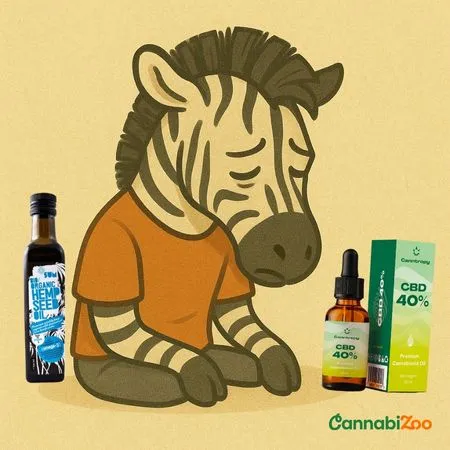
Hemp oil and anxiety
Since hemp oil does not contain cannabinoids, it does not directly affect the brain receptors associated with anxiety.
There is no clinical evidence that it reduces anxiety or stress on its own.
CBD oil and anxiety
CBD works with the endocannabinoid system and may also affect 5-HT1A serotonin receptors, which are associated with the regulation of anxiety and stress.
What studies suggest:
🔎 Large case series (72 patients): ~79% reduction in anxiety scores within 1 month; open-label study without placebo.
🔎 Social anxiety and public speaking (acute dose): in a simulated public speaking test, CBD reduced anxiety compared to placebo.
🔎 Mechanism – 5-HT1A: reviews describe CBD binding to 5-HT1A as one of the possible pathways for anxiolytic effects.
🔎 Summaries and meta-analyses: results are mixed and evidence varies across diagnoses, doses, and study designs; higher-quality randomised controlled trials are still lacking.
CBD research is still in its infancy and the results are not yet consistent. Some studies have been conducted on animals or small samples of people, and the effect may vary depending on the dose, form, and individual condition of the person.
👩⚕️ Integrative physician Dr Melinda Ring points out that the data on CBD and anxiety are interesting, but need to be confirmed by larger, higher-quality studies.
Hemp oil vs. CBD oil for pain
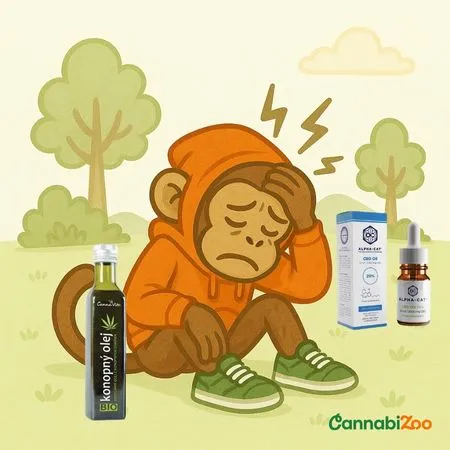
Hemp oil and pain
Hemp oil itself is not an analgesic. Although it contains omega-3/6 and other substances associated with anti-inflammatory effects, do not expect quick or significant pain relief.
Although it feels pleasant as a massage oil, relief is usually provided by the massage itself and the added substances, not the hemp oil itself.
There is a lack of high-quality clinical evidence that hemp seed oil alone relieves pain when taken internally.
CBD oil and pain
Many users report that CBD oil helps relieve back pain, joint pain, migraines, and neuropathic pain.
What studies suggest:
🔎 Preclinical research (on animal models) suggests that CBD may help reduce inflammation and affect pain perception by acting on the endocannabinoid system, particularly through CB1 and CB2 receptors, but also through other biological pathways.
🔎 In humans, the data is mixed: there are studies and summaries that suggest potential for certain types of chronic pain (e.g., arthralgia), but the results are not yet consistent.
🔎 Full-spectrum oils: new, high-quality studies in selected diagnoses (e.g. chronic back pain) show better results than placebo; however, this is not isolated CBD, and the efficacy may be related to the synergy of the components.
Conclusion
In our hemp zoo, each of these products has its own enclosure: hemp oil provides nutrients and benefits the skin and hair, while CBD oil can relieve pain symptoms, soothe the nerves and induce mental balance.
If you are looking for nutritional support or gentle skin care, choose hemp seed oil. If you want to benefit from the potential therapeutic effects of cannabidiol, consider CBD oil.
For topical ointments, look for active ingredients (CBD, camphor, menthol); hemp oil is an excellent carrier base.
FAQ
1. Is hemp oil legal?
Yes! Hemp seed oil is legal because it does not contain THC.
2. Is hemp oil suitable for you?
Mostly yes! Hemp oil is suitable for most people, unless you are allergic to seeds (very rare). It contains healthy fats, vitamins and minerals that are beneficial for the heart, skin and hair.
3. Does hemp seed oil contain CBD?
No! Hemp seed oil does not contain any cannabinoids; it is cold-pressed from hemp seeds.
However, CBD oil may contain hemp oil, which serves as a carrier oil.
4. Is hemp oil or CBD oil better?
It cannot be said that one is better than the other, it just depends on what you expect from it and what you want to use it for:
- Hemp oil is ideal for nutrition, skin and hair care, and supplementing healthy fats.
- CBD oil is used to support mental well-being, sleep, and stress or pain management.
5. What hemp oils can I buy at CannabiZoo?
At CannabiZoo, we have a wide range of hemp seed oils for nutrition and skin and hair care.
If you are looking for an oil for nutrition, we recommend 👇:
- SUM Organic Hemp Oil, 250 ml
- CannaVita Organic Cold-Pressed Hemp Oil, 250 ml
- Konopný Táta Hemp Oil, 250 ml
For skin and hair, you can try 👇:
- Annabis Cannol Hemp Oil, 50 ml
- Dobre Konopi Hemp Oil CBDios 3.2%, 13 ml
- Dobre Konopi Hemp Massage Oil with CBDios, 100 ml
- Cannor Virgin Hemp Oil - 100 ml
- Cannor Nourishing and Soothing Elixir – Hair and Beard Oil, 30 ml
6. How can you recognise high-quality hemp oil?
You can recognise high-quality hemp oil by 👇:
- Composition: 100% cold-pressed hemp oil, without any added oils, flavourings or preservatives.
- Certification: Look for labels such as organic, cold-pressed, or third-party certified.
- Packaging:
- Ideally in a dark glass bottle (e.g. dark glass or UV protection) → protects from light and slows down rancidity.
- The cap should be resealable, ideally with a protective foil or seal.
The label should indicate the production batch and best-before date. - Oil colours: Slightly greenish to golden, with a darker shade for unrefined oil.
- Smell: Delicately nutty, natural, not rancid or unpleasantly pungent.
- Taste: Pleasant, slightly nutty; no bitterness.
ℹ️ If you store the oil in a cool, dark place, it will have a longer shelf life.
Sources:
- medicalnewstoday.com/articles/hemp-seed-oil-vs-cbd-oil
- nature.com
- jandonline.org/article/S2212-2672(14)01468-3/abstract
- thepermanentejournal.org/doi/epdf/10.7812/TPP/18-041
- sciencedirect.com
- sciencedirect.com/science/article/abs/pii/S0006295225000048
- sciencedirect.com/science/article/abs/pii/S096399691830992X
- frontiersin.org
- frontiersin.org/journals/pharmacology/articles/10.3389/fphar.2018.01259/full
- frontiersin.org/journals/nutrition/articles/10.3389/fnut.2025.1669375/full
- jpain.org/article/S1526-5900%2823%2900582-5/fulltext
- mdpi.com
- mayoclinicproceedings.org/article/S0025-6196(19)30007-2/fulltext
- ajcn.nutrition.org/article/S0002-9165%2824%2900462-3/fulltext
- jkmu.kmu.ac.ir/article_91663.html
- nutritionandmetabolism.biomedcentral.com/articles/10.1186/1743-7075-7-32
- pubmed.ncbi.nlm.nih.gov/16019622
- czasopisma.umlub.pl/curipms/article/view/2937
- researchgate.net/publication/354880037_THE_EFFECT_OF_HEMP_SEED_OIL_ON_SKIN_AND_SOAP_PERFORMANCE
Author: Patricie Mikolášová
Photo: AI
“All information provided on this website, as well as information provided through this website, is for educational purposes only. None of the information contained herein is intended to be a substitute for a medical diagnosis and should not be considered medical advice or recommended treatment. This website does not endorse, condones or advocate the licit or illicit use of narcotic drugs or psychotropic substances or the commission of any other illegal activity. For more information, please see our Disclaimer.”
Recommended products8
CannaVita Bio hemp seed oil cold pressed 500 ml
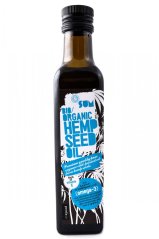
SUM Hemp oil BIO, 250 ml
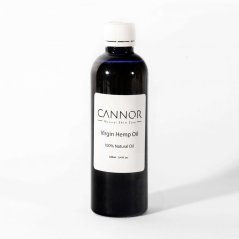
Cannor Virgin hemp oil - 100 ml
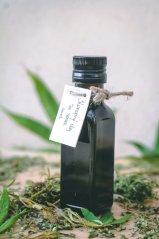
Dobre Konopi Hemp seed oil, 100 ml
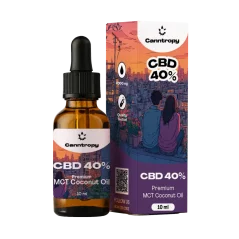
Canntropy CBD Hemp Oil, 40%, 4000mg, 10ml
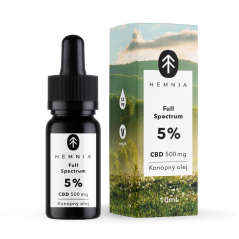
Hemnia Full Spectrum CBD Hemp Oil 5%, 500mg, 10 ml
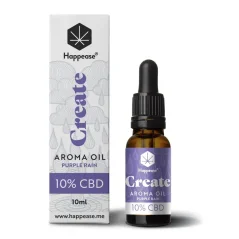
Happease Create CBD Oil Purple Rain, 10 % CBD, 1000 mg, 10 ml