English (EUR)
 Česky (CZK)
 Deutsch (EUR)
 Austria (EUR)
 Polski (PLN)
 Français (EUR)
 Español (EUR)
 Italiano (EUR)
 Română (EUR)
 Ελληνικά (EUR)
 Dutch (EUR)
 Eesti keel (EUR)
 Português (EUR)
 Magyar (EUR)
 Svenska (EUR)
 Dansk (EUR)
 Suomen kieli (EUR)
 български език (EUR)
 Slovenščina (EUR)
 Slovensky (EUR)
 lietuvių kalba (EUR)
 latviešu valoda (EUR)
 Hrvatski (EUR)
 українська мова (EUR)
 Bahasa Indonesia (EUR)
What does THCV have in common with THC and why is it attracting the attention of scientists?
- A rare species named in 1971: What is THCV?
- The origin of THCV
- Research laboratory: How does THCV affect the ECS?
- The effects of THCV
- THCV in the hands of caregivers: Does it have therapeutic potential?
- THCV vs. THC vs. THCP
- THCV Pavilion: Products with Tetrahydrocannabivarin
- Time to leave the pavilion: What have we learned about THCV?
- FAQ
A rare species named in 1971: What is THCV?
Welcome to the cannabinoid pavilion! 🐒 Today, we will introduce you to another of the remarkable creatures of the cannabis realm — tetrahydrocannabivarin (THCV). Although it occurs naturally in the cannabis plant, it is only found in trace amounts — it is classified as a minor cannabinoid, making it as rare as an albino tiger 🐅.
Chemically, THCV is very similar to the well-known THC, but it has a shorter side chain consisting of three carbon atoms (THC has five), which significantly affects how it acts on our body.
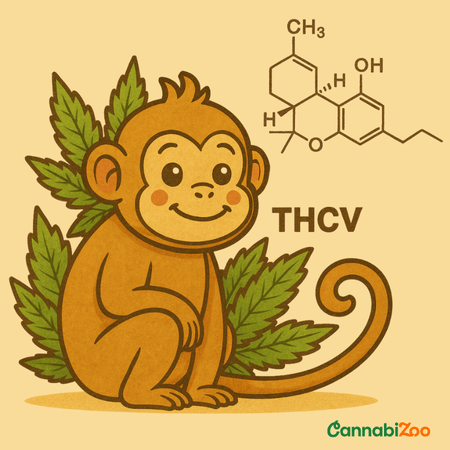
The first published mention of this creature 🦠 comes from the scientific journal Nature in 1971, where Frans W. H. M. Merkus first formally named it THCV and stated that it is a naturally occurring component of hashish.
This was preceded by the work of Vollner et al. (1969), who isolated cannabidivarin (CBDV) – a propyl homologue of CBD with a C3H7 side chain instead of C5H11 – and also predicted the existence of other propyl derivatives in hashish.
A year later (1970), Gill, Paton and Pertwee described a propyl homologue of Δ¹-THC with a C3H7 side chain instead of C5H11 (today's Δ⁹-THC) while examining a finished cannabis tincture. This was the first published mention of a THC compound with a C3 side chain, although at that time it was not yet named THCV.
Even though THCV was first named in 1971, its popularity is still nowhere near that of some other cannabis compounds in our zoo 🐅 – such as CBD or CBN.
The origin of THCV
THCV 🦠 is formed as a by-product of cannabigerovarinic acid (CBGVA), which is converted by an enzyme into tetrahydrocannabivarinic acid (THCVA). This is then converted into THCV by heat or UV radiation (decarboxylation).
Extracting THCV from cannabis is painstaking work 🐜, as it only occurs in trace amounts. That is why products containing this cannabinoid are currently made from THCV obtained in a laboratory 🧪 – either synthetically or by isolating it from cannabis extracts using advanced chromatography.
Tetrahydrocannabivarin is found only in certain strains of cannabis 🌿 – the highest THCV content is found in native African strains of Cannabis sativa.
Research laboratory: How does THCV affect the ECS?
Like other cannabinoids derived from cannabis, THCV acts on the endocannabinoid system (ECS). This system is present in all mammals 🐒 and can be thought of as the alpha male of a gorilla family 🦍, who controls the entire group and ensures that everything is in balance (digestion, sleep, mood, etc.). Whenever stability is disrupted, the male intervenes and helps to restore it.
The ECS consists of endocannabinoids, enzymes and endocannabinoid receptors, the best known of which are CB1 and CB2. CB1 receptors are mainly present in the central nervous system (mainly in the brain 🧠), but also in other cells throughout the body, while CB2 receptors are mainly found in the immune system and peripheral tissues.
Studies to date show that THCV binds to CB1 and CB2 receptors with significant efficacy, although the exact mechanism of this action is still being investigated. Another study reports that THCV may act as:
- a CB1 receptor antagonist – partially counteracting the effects of THC,
- and at the same time a CB2 agonist – activating the receptor.
Behaviour in the enclosure: Effects of THCV
While THC is the showman 🦧 that performs psychoactive tricks 🌀 (euphoria, relaxation, increased appetite or drowsiness), THCV is not psychoactive in small doses – it is often referred to as a non-intoxicating cannabinoid and, when ingested in small amounts, does not cause strong euphoria or dissociative states. The reason for this is its shorter tail 🐒, which binds to the receptors of the endocannabinoid system less strongly than THC.
According to the experience of some human beings, THCV can increase feelings of alertness and clarity of mind, but at the same time, subtle changes in perception may occur. In higher doses, THCV can cause feelings similar to the effects of THC, although usually in a much milder form.
Users seek out THCV primarily for its relaxing effects. Other sought-after benefits may include:
- improved concentration and productivity
- slowing down or speeding up the perception of time
- different perception of sounds and colours
- improved attention
- increased energy
- suppression of appetite
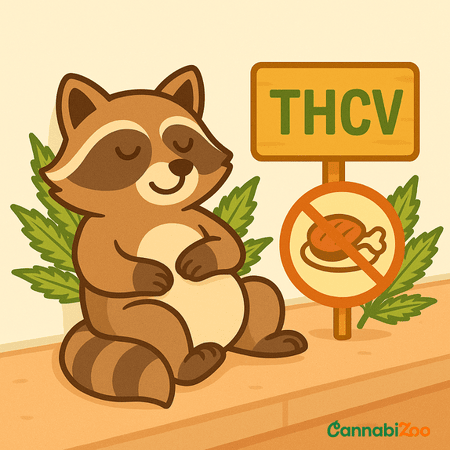
Side effects of THCV
Little is known about the side effects of THCV. When exploring cannabinoids, it is therefore advisable to exercise the same caution as in a poisonous animal exhibit 🐍🕷️.
Available sources suggest that reactions similar to those of other cannabinoids with a similar chemical structure may occur – dry mouth, red eyes, rapid heartbeat or short-term memory impairment.
In addition, psychoactive effects may occur when higher doses of THCV are used 🌀.
THCV in the hands of carers: Does it have therapeutic potential?
THCV is not yet as well known and widespread 🐡 as CBD or THC, but some studies point to its possible therapeutic benefits for the following conditions:
1. THCV as an appetite suppressant 🐯
Observations by carers show that, unlike THC, which usually stimulates the appetite of all members of the pack🐅 , THCV can actually suppress appetite for a period of time.
A 2020 study suggests that THCV may suppress hunger, increase feelings of fullness, and affect energy metabolism. As a result, it has the potential to support weight loss and the treatment of obesity and type 2 diabetes. Other research indicates that THCV may improve insulin sensitivity and promote glucose uptake.
At CannabiZoo, we were also very interested in the work of Gregory L. Smith (2025), in which researchers compared three groups of human subjects 👱 – one group was fed an extract containing THCV and other cannabinoids in a higher daily dose, the second group was fed the same extract in a lower dose, and the third group received a placebo.
Both doses of food 🥣 with THCV showed a statistically significant decrease in weight, waist circumference, systolic blood pressure, and total and LDL cholesterol. The higher daily dose worked better for weight loss than the lower one, and both results (use of the extract) were statistically significantly different from the placebo group.
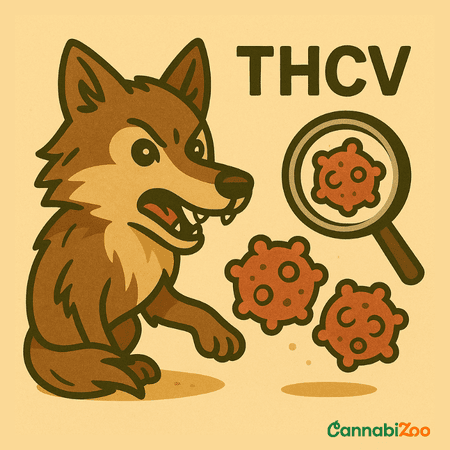
2. THCV as a predator of cancer cells? 🐺
Just as wolves regulate the population of deer, hares, and foxes, THCV could also be a predator of cancer cells, according to a 2024 study. The scientific work is based on physical-chemical analysis and analysis of similarity to drugs.
However, the authors of the research emphasise that further biological verification 🔍 will be needed to confirm its potential.
3. THCV as a bone builder 🦴
THCV could contribute to the formation of new bone tissue in humans thanks to its binding to the CB2 receptor of the endocannabinoid system, which is also found in bones.
A 2012 study suggested that THCV and certain other cannabinoids stimulate the formation of new bone mass, promote collagen production, and increase enzyme activity (alkaline phosphatase) in bone marrow cells 🦴.
Tests conducted on mice 🐭 showed that THCV can activate CB2 receptors in vitro, thereby alleviating the symptoms of inflammation and inflammatory pain. By influencing bone cell activity via the CB2 receptor and simultaneously alleviating inflammation, THCV could find application in the treatment of osteoporosis.
4. THCV as a Parkinson's disease tamer 🐎
Just as an experienced rider can tame a runaway horse 🐴, THCV could help slow the progression of Parkinson's disease. Research from a scientific journal conducted on mice 🐁 has shown that, thanks to its antioxidant properties and ability to activate CB2 while blocking CB1 receptors, THCV has a promising therapeutic and pharmacological profile for slowing the progression of Parkinson's disease and alleviating its symptoms.
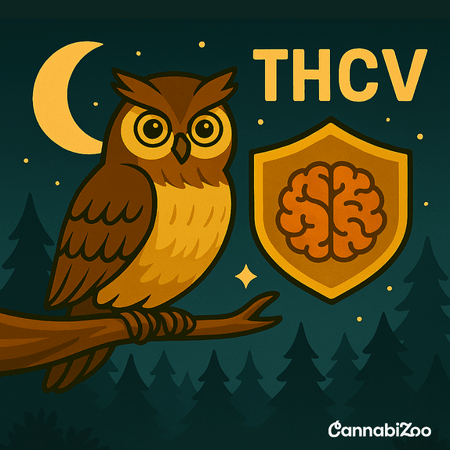
5. THCV as a guardian of the brain 🦉
Just like an owl 🦉 guarding the forest at night, THCV can help maintain the balance of chemicals in the brain – it has the potential to alleviate some symptoms of schizophrenia 🧠.
The authors of a 2014 research paper investigated the possible antipsychotic effects (i.e., effects that suppress psychotic symptoms such as hallucinations and delusions) and found that THCV may increase the activation of the serotonin receptor 5-HT1A. This receptor is mainly found in the brain, and influencing its function can alleviate some of the negative symptoms of schizophrenia.
6. THCV as an aid in the fight against acne
Few people want their skin to shine like a sea lion's 🌊 . According to available studies, THCV can help regulate sebum production.
Research also suggests possible anti-inflammatory effects that could alleviate acne and combat the bacteria involved in its development.
THCV vs. THC vs. THCP
Although the abbreviation THCV differs from THC by only one letter, they are distant relatives 🦌 with different effects. Their molecular structure is similar, but THCV has a shorter side chain.
Compared to THCV, THC binds more strongly to endocannabinoid receptors and exhibits psychoactive effects even when taken in smaller doses.
As if there weren't enough relatives, a newly described species was added to the mix in 2019 – THCP (tetrahydrocannabiforol).
A study from the same year showed that THCP interacts significantly with the endocannabinoid system and has a strong affinity for CB1 receptors in the brain in particular. Laboratory in vitro tests have shown that THCP's binding to receptors can be up to 33 times stronger than THC and up to 63 times stronger than THCV.
|
THCV |
THC |
THCP |
|
|
Occurrence in cannabis |
Yes, in trace amounts |
Yes |
Yes |
|
Chemical structure |
Side chain with 3 carbon atoms |
Side chain with 5 carbon atoms |
Side chain with 7 carbon atoms |
|
Molecular formula |
C19H26O2 |
C21H30O2 |
C21H30O2 |
|
Binding to cannabinoid receptors CB1 |
Lower |
Stronger |
Stronger than THC |
|
Effects |
Non-intoxicating in small doses |
Psychoactive |
Psychoactive and apparently the strongest |
|
Appetite |
Decreases |
Stimulates |
Not yet known |
THCV Pavilion: products with tetrahydrocannabivarin
THCV has its place at CannabiZoo – it appears in a whole range of products from vapes and hash to oils and sweets:
- THCV vapes: disposable, liquids and cartridges (for reusable vapes)
- THCV oils and drops: THCV extract with a carrier oil such as sunflower, hemp or coconut oil. In our zoo, you will find premium THCV oil with a 5% concentration.
- THCV prerolls: pre-rolled joints made from high-quality hemp flowers supplemented with THCV distillate. Each preroll contains less than 0.2% THC and also contains other cannabinoids such as CBD, CBG and CBN.

- THCV flowers: industrial hemp buds infused with THCV distillate in various concentrations, strains and flavours. At our zoo, you will find, for example, Czech CBD THCV Amnesia flowers.
- THCV hash: hemp concentrate made from industrial hemp resin and THCV distillate.
- THCV gummies and other sweets: head to the sweet pavilion, where you can enjoy THCV candies, biscuits and chocolate. For bears 🐻, we have THCV honey.
Time to leave the pavilion: What have we learned about THCV?
THCV is a cannabinoid that scientists discovered in the early 1970s, but it has not yet been thoroughly researched. It is classified as a minor cannabinoid because it occurs only in trace amounts in the cannabis plant. Although its molecular structure is similar to THC, it has a different effect on the human body.
THCV binds to both CB1 and CB2 receptors in the endocannabinoid system and, according to available studies, has potential therapeutic benefits that need to be explored further 🧪. THCV is currently available in the form of vapes, flowers, prerolls, hash and other concentrates, oils and sweets.
FAQ
1. Is THCV legal?
THCV is a cannabinoid that is currently banned in many European countries or has an unclear legal status. If you want to purchase THCV, always check the current laws in your country. As of 23 October 2025, THCV is not on the list of banned substances in the Czech Republic, Portugal, Poland or Sweden, for example.
2. How long does THCV last?
The first effects after ingesting THCV may occur within 30-90 minutes. However, the actual onset may vary depending on the dose, form of use, metabolism and sensitivity of the individual. Based on available studies, a slower onset and peak effect can be expected after oral administration, approximately 4-5 hours later.
3. Will a drug test detect THCV?
A standard drug test is unlikely to detect THCV directly, but it may yield a positive result due to metabolites (e.g. THC-COOH) that are produced when the substance breaks down in the body. However, it cannot be ruled out that some tests may detect THCV itself.
4. What does THCV do?
Users describe the effects of THCV when used in smaller doses as a light, clear and focused state of consciousness. Some have reported increased energy, improved attention and suppressed appetite. There is no classic "high", but rather a feeling of alertness and a clearer mind.
At lower doses, THCV acts as a CB1 receptor antagonist (it can dampen the effects of THC), but at higher doses, it can exhibit agonistic behaviour and produce effects similar to THC.
5. How strong is THCV?
THCV has a shorter side chain than THC and therefore a weaker binding to CB1 receptors in the endocannabinoid system. In terms of psychoactivity, THCV is usually milder than THC. However, the strength of the effect depends on the type and strength of the product, the size of the dose, and also on the sensitivity and metabolism of the individual.
Sources:
- Tetrahydrocannabivarin
- Tetrahydrocannabivarin is Not Tetrahydrocannabinol
- The role of tetrahydrocannabivarin (THCV) in metabolic disorders: A promising cannabinoid for diabetes and weight management
- The diverse CB1 and CB2 receptor pharmacology of three plant cannabinoids: delta9-tetrahydrocannabinol, cannabidiol and delta9-tetrahydrocannabivarin
- Are cannabidiol and Δ(9) -tetrahydrocannabivarin negative modulators of the endocannabinoid system? A systematic review
- An introduction to the endogenous cannabinoid system
- The biosynthesis of cannabinoids
- Peripheral cannabinoid receptor, CB2, regulates bone mass
- A novel phytocannabinoid isolated from Cannabis sativa L. with an in vivo cannabimimetic activity higher than Δ9-tetrahydrocannabinol: Δ9-Tetrahydrocannabiphoro
- Psychosis and suicide attempt following a single use of delta-9-tetrahydrocannabiphorol: A case report
- A novel phytocannabinoid isolated from Cannabis sativa L. with an in vivo cannabimimetic activity higher than Δ9-tetrahydrocannabinol: Δ9-Tetrahydrocannabiphorol
- Tetrahydrocannabivarin (THCV) Dose Dependently Blocks or Substitutes for Tetrahydrocannabinol (THC) in a Drug Discrimination Task in Rats
- Minor Cannabinoids: Biosynthesis, Molecular Pharmacology and Potential Therapeutic Uses
- Weight Loss and Therapeutic Metabolic Effects of Tetrahydrocannabivarin (THCV)-Infused Mucoadhesive Strips
- A Comparative Analysis on the Potential Anticancer Properties of Tetrahydrocannabinol, Cannabidiol, and Tetrahydrocannabivarin Compounds Through In Silico Approach
- The phytocannabinoid, Δ9-tetrahydrocannabivarin, can act through 5-HT1A receptors to produce antipsychotic effects
- Symptom-relieving and neuroprotective effects of the phytocannabinoid Δ9-THCV in animal models of Parkinson's disease
- The plant cannabinoid Δ9-tetrahydrocannabivarin can decrease signs of inflammation and inflammatory pain in mice
- The differential effectiveness of selected non-psychotropic phytocannabinoids on human sebocyte functions suggests their potential use in the treatment of dry/seborrhoeic skin and acne.
- Pharmacokinetics of Oral Cannabinoid Δ8-Tetrahydrocannabivarin and Its Main Metabolites in Healthy Participants
Author: Lucie Schmidtová
Photo: AI
“All information provided on this website, as well as information provided through this website, is for educational purposes only. None of the information contained herein is intended to be a substitute for a medical diagnosis and should not be considered medical advice or recommended treatment. This website does not endorse, condones or advocate the licit or illicit use of narcotic drugs or psychotropic substances or the commission of any other illegal activity. For more information, please see our Disclaimer .”
Recommended products10
Czech CBD THCV flowers Amnesia, 25 % THCV, 1 - 1000 g
Canntropy THCV Flower Durban Gelato live resin terpenes, THCV 96% quality, 1 g - 100 g
CanaPuff THCV Flower Snicker Doodle, THCV 69 %, 1 - 5 g
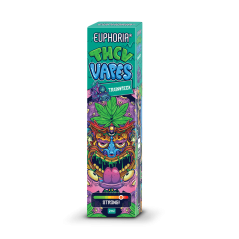
Euphoria THCV Disposable Vape Pen Trainwreck, 98% THCV, 2 ml

Hemnia Premium Functional THCV, CBG and CBD Vape Pen Active Life - 20 % THCV, 50 % CBG, 25 % CBD, Ginger, Gingko, Guarana, 1ml
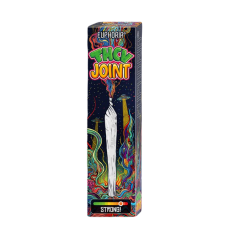
Euphoria THCV Prerolled Aromatic Stick, 1 pc
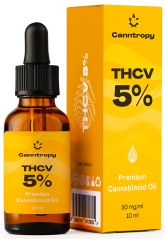
Canntropy THCV Premium Cannabinoid Oil - 5 %, 500 mg, 10 ml
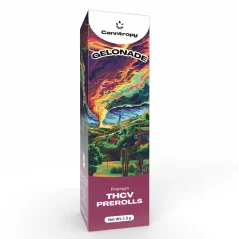
Canntropy THCV Prerolls Gelonade, THCV 96% quality, 1,5 g
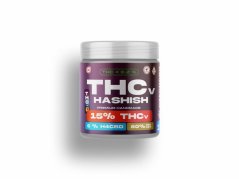
Czech CBD THCV Hash, 15 % THCV, 1 - 1000 g