English (EUR)
 Česky (CZK)
 Deutsch (EUR)
 Austria (EUR)
 Polski (PLN)
 Français (EUR)
 Español (EUR)
 Italiano (EUR)
 Română (EUR)
 Ελληνικά (EUR)
 Dutch (EUR)
 Eesti keel (EUR)
 Português (EUR)
 Magyar (EUR)
 Svenska (EUR)
 Dansk (EUR)
 Suomen kieli (EUR)
 български език (EUR)
 Slovenščina (EUR)
 Slovensky (EUR)
 lietuvių kalba (EUR)
 latviešu valoda (EUR)
 Hrvatski (EUR)
 українська мова (EUR)
 Bahasa Indonesia (EUR)
Do you know what the endocannabinoid system is and what it actually does? The Complete Guide to the ECS
- What is the endocannabinoid system (ECS)?
- What are the basic components of the ECS? 🧩
- 1. Endocannabinoids (fast messengers) 🏃♂️
- How are endocannabinoids and cannabinoids from cannabis related? 🌿
- 2. CB1/CB2 receptors (signal receivers) and the broader endocannabinoid system 🧠🧬
- How do cannabinoids interact with CB1 and CB2 receptors? 🌿
- 3. Synthesis enzymes (cleanup crew) 🧹
- How and when scientists discovered the endocannabinoid system 🧑🔬
- Endocannabinoids and enzymes: completing the “missing parts of the circuit” 🧩🌿
- How does the ECS work in the body? 🔄
- Why do we have cannabinoid receptors and how did they evolve 🔍🏃♂️
- Therapeutic targets and the use of the ECS in medicine 👨⚕️
- When the ECS is out of balance: activation vs. CB1 blockade ⚖️
- THC, CBD, CBG and CBN: how they act in the ECS 🌿
- The endocannabinoid system: a foundation of balance in the body and a key research direction 🔬
- Why the ECS is important for your body 💚
- FAQ
What is the endocannabinoid system (ECS)?
You might be familiar with this—sometimes stress just won’t go away, your mood swings, and sleep doesn’t come as easily as you’d like. An unassuming system plays a role in many of these things: the endocannabinoid system (ECS).
The ECS is essentially a communication system. It helps cells “talk to each other” about when to speed up, slow down, or calm down.
It’s like a “zoo keeper” 🐘 trying to keep everything in the body in balance.
It is precisely in connection with the ECS that we are interested in cannabinoids like CBD (cannabidiol), because they can work with it and help it function better.
💡 Why is this important? The endocannabinoid system influences how you cope with stress, your mood, and how you perceive pain.

What are the basic components of the ECS? 🧩
For the endocannabinoid system to function properly, it needs several key components that constantly work together 👇:
Each has its own role—some produce signals, others receive them, and still others ensure they are quickly “cleared away.”
Endocannabinoids aren’t produced in advance; the body creates them only when it needs them. Once they’ve fulfilled their role, enzymes quickly break them down 🐆.
Together, they form a simple yet highly precise communication circuit that allows the body to respond to the current situation.
1. Endocannabinoids (fast messengers) 🧬
Endocannabinoids are molecules produced naturally by the body that serve as signals in the ECS. They are derived from lipids (the fatty components of cell membranes) and their role is to transmit information between cells.
Think of them as speedy messengers—hummingbirds 🐦: they fly in, deliver the message, and fly away again.
Among the best-known endocannabinoids are primarily two:
- Anandamide (AEA; N-arachidonoylethanolamine): often called the “bliss molecule”
- 2-AG (2-arachidonoylglycerol): there’s usually even more of it in the body than AEA
These molecules help regulate things like mood, stress, or pain—depending on what the body is dealing with at the moment.
Anandamide (AEA)
Scientists isolated anandamide (AEA; N-arachidonoylethanolamine) from the brain and described it in 1992. The name comes from the Sanskrit word “ananda,” which means bliss.
📚 A study showed that anandamide binds to cannabinoid receptors and influences how cells communicate with each other.
2-AG
The second important endocannabinoid is 2-arachidonoylglycerol (2-AG). Scientists discovered it in the mid-1990s. It is a substance capable of activating cannabinoid receptors 🔬.
In many tissues, including the brain, it is often found in higher concentrations than anandamide, suggesting that it plays a significant role in the ECS.
2-AG is one of the main “signals” the body uses to adjust its responses to the current situation.

How are endocannabinoids and cannabinoids from cannabis related? 🌿
We already know that the body produces its own substances called endocannabinoids, which act as natural signals. These bind to cannabinoid receptors (CB1 and CB2) and help regulate various processes in the body.
Interestingly, cannabinoids from cannabis (such as CBD or THC) are similar to these substances in some ways—whether in their structure or in their ability to influence the same receptors.
Simply put 👉 the body has its own “locks” (receptors) and “keys” (endocannabinoids)—and certain compounds from cannabis can fit into these locks or influence them.
Although the body produces endocannabinoids on its own, the ECS may not always function optimally.
For example, during prolonged stress, sleep deprivation, or general physical strain, its regulation may be less effective. This can manifest as insomnia, increased sensitivity to stress, and mood swings.
This is precisely why scientists and the public are interested in cannabinoids such as CBD, CBN, CBG, and THC, which can influence the ECS.
2. CB1/CB2 receptors (signal receivers) and the broader endocannabinoid system 🧠🛡️
For a message to be delivered, someone has to receive it.
This is where receptors—the “receivers”—come into play; in the ECS, the two most important ones are 👇:
- CB1: mainly in the brain
- CB2: primarily in the immune system
CB1
The CB1 receptor is a special “signal receiver” in cells that scientists first discovered in the brain.
When endocannabinoids bind to it, it can weaken signal transmission between nerve cells—so the brain doesn’t hear the “alarm” as loudly.
CB1 is like an owl on watch 🦉 – it sits in the right spot, monitors incoming signals, and when it picks one up, it can modulate it.
💡 How does this work in practice? For example, when something hurts, your nerves send a “watch out, problem” signal to your brain. The CB1 receptor can dampen this signal, so your brain perceives the pain as less intense.
CB2
The CB2 receptor is found primarily in immune system cells. When activated, it helps influence how strongly the body reacts to inflammation or other “problems.”
It works like a colony of ants 🐜🌿—a defense unit that activates when things need to be brought back into balance.
💡 How does this work in practice? For example, when you have inflammation in your body, the immune system sends signals to resolve the situation. The CB2 receptor can help moderate this response so it isn’t unnecessarily excessive.

A Broader Perspective: The Endocannabidiome
📚 Research from 2015 shows that the ECS is part of an even broader system known as the endocannabidiome.
In addition to CB1 and CB2, this system includes other receptors, enzymes, and lipid mediators that function in a similar way.
👉 However, you don’t need to know all that to understand how the ECS works.
In this guide, we’ll focus on the “hard core” of the ECS, which consists of 👇:
- Endocannabinoids AEA and 2-AG
- CB1 and CB2 receptors
- Enzymes responsible for their production and breakdown
ℹ️ These three components form the basic communication circuit of the endocannabinoid system.
How are cannabinoids related to CB1 and CB2 receptors? 🌿
CB1 and CB2 receptors are essentially “signal receptors” to which cannabinoids can bind.
Whether they are endocannabinoids or exogenous cannabinoids, their effects are primarily mediated through these receptors.
When a suitable substance binds to these receptors, the cell adjusts its activity—for example, by dampening pain transmission, influencing the stress response, or modulating the immune response.
However, each cannabinoid affects the ECS in a different way. You can learn more about this in the section: THC, CBD, CBG, and CBN: How They Work in the ECS 🌿.
3. Synthesis Enzymes (Cleanup Crew) 🧹
Once a message has served its purpose, it must disappear. The body does not produce endocannabinoids randomly—their formation and breakdown are controlled by special enzymes.
They function like bees in a hive 🐝: each has its own task—some help create the molecules, while others break them down once their role is fulfilled.
👉 Thanks to this, the ECS functions exactly as it should.
How endocannabinoids are formed
The body produces endocannabinoids on its own—directly within cells from the fatty components of cell membranes.
These are not substances that are produced in advance. They are created only when the body needs them.
Their production is controlled by special enzymes that act as a “production team.” Depending on the situation, they create the necessary signal and quickly break it down again after it’s been used.
💡 Why is this important? The ECS must be fast and precise—the signal is generated only when needed and disappears quickly.
How and when scientists discovered the endocannabinoid system 🕵️🔬
The discovery of the endocannabinoid system is a wonderful example of how science sometimes takes a bit of a detour. It didn’t all start with the study of the human body, but with research on cannabis 🔬🌿.

From cannabis to the first clue
In 1964, scientists Raphael Mechoulam and Yechiel Gaoni published a paper in which they isolated and described the structure of the main psychoactive compound in cannabis—tetrahydrocannabinol (THC).
This discovery marked the beginning of modern research into cannabinoids and their effects on the human body.
At that time, however, scientists did not yet know exactly how THC works in the body.
A Mystery in the Brain
An important breakthrough came in the late 1980s. Scientists William Devane, Allyn Howlett, and their colleagues discovered a specific site in the brain where cannabinoids bind.
Through experiments, they demonstrated that the effects of these substances are not random—there are specific receptors in the body to which they bind.
In other words: cannabis molecules in the body were encountering pre-existing “locks.”
Discovery of the First Receptor
The next major breakthrough came in 1990, when Matsuda and his colleagues confirmed that this receptor actually functions within cells.
It turned out to be a specific type of receptor that transmits signals within cells and is found primarily in the brain.
📚 Further research then gradually revealed where these receptors are located throughout the brain.
And then came the question…
Now that scientists knew that cannabinoid receptors existed in the body, they became interested in one more thing: Why would the human body have receptors for plant-derived substances?
The answer to this question ultimately led to the discovery of the body’s own cannabinoid molecules (endocannabinoids) and the entire endocannabinoid system.
Endocannabinoids and enzymes: filling in the “missing pieces of the puzzle” 🧩🌿
When scientists discovered cannabinoid receptors, another intriguing question began to emerge: why would the body have receptors for substances found in cannabis?
The answer came in the early 1990s—the body actually produces its own molecules that naturally activate these receptors. And gradually, the full picture of the endocannabinoid system began to emerge.
👉 It turned out that these receptors do not primarily serve cannabis compounds, but exist so that the body can regulate important functions such as stress, pain, immunity, and neural activity on its own.
In 1992, William Devane and his colleagues isolated the molecule anandamide from the brain. It turned out that it can bind to cannabinoid receptors.
Suddenly, it became clear that the endocannabinoid system is not in the body because of cannabis, but that it is a natural part of the body’s functioning.
Just one year later, in 1993, scientists described the CB2 receptor, which is found primarily in immune cells.
This discovery significantly reinforced the idea that cannabinoid communication in the body does not occur only in the brain, but also in the immune system and other parts of the body.
Another important discovery followed in 1995: scientists identified 2-AG as a substance produced by the body itself that activates cannabinoid receptors.
The final piece: how the body shuts down the signal
For the entire system to function, it’s not enough to simply turn the signal on—the body must also be able to “turn it off” in time.
This was one of the final pieces of the puzzle that scientists gradually uncovered 👇:
- In 1996, they described the enzyme FAAH (fatty acid amide hydrolase), which breaks down anandamide (AEA).
- In 2002, they identified the enzyme MAGL (monoacylglycerol lipase), which terminates the effect of 2-AG.
📚 Further research has shown that MAGL is responsible for most of the breakdown of 2-AG in the brain.
🔬 Thanks to these discoveries, the full picture of the ECS has finally been completed: the body not only has receptors and its own signaling molecules, but also a precise mechanism for quickly terminating the entire process.

How does the ECS work in the body? 🔄
The endocannabinoid system operates throughout the entire body—from the brain to immune cells. Its main role is to help maintain internal balance 🧘♀️.
And how does this work in practice? 👇
- A stimulus arises in the body—such as stress, fatigue, or pain
- The body produces endocannabinoids (signals)
- The endocannabinoids bind to receptors on the cells
- The cells adjust their activity accordingly – for example, during stress, they help the body calm an excessive reaction and return to balance
- Enzymes then quickly “clear away” the signal
👉 The entire process is fast and occurs only when needed—that is, when the body is out of balance (such as during stress, pain, or inflammation).
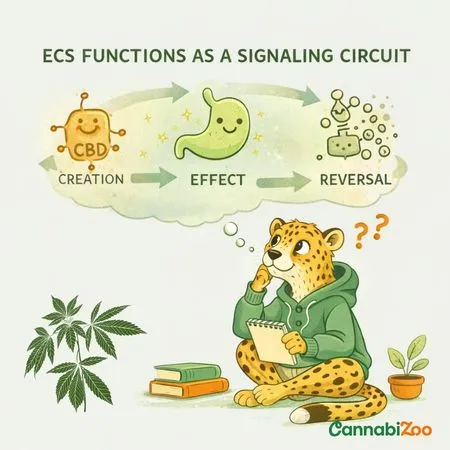
How nerve signals are “quieted”: feedback
One of the places where the endocannabinoid system can be well understood is the connection between two nerve cells, known as a synapse, a small site where neurons pass signals to one another.
👉 One cell sends a signal; the other receives it.
When the second (postsynaptic) cell is too active, it can produce its own endocannabinoids, such as anandamide or 2-AG.
These molecules then travel back to the first cell and instruct it not to send the signal as strongly.
👉 Result: communication between cells is “dampened.”

Endocannabinoids do not travel forward like ordinary signals, but return to the first cell.
Today, scientists consider this principle to be one of the main ways the ECS regulates communication between neurons and helps maintain the stability of neural networks.
How it maintains balance: stress and mood
The ECS responds to various changes in the body, such as stress, inflammation, or changes in energy levels, and can dampen or modulate the body’s response as needed.
Stress and the HPA axis
Significant attention is also being paid to the relationship between the ECS and the so-called HPA axis (hypothalamus–pituitary–adrenal), which controls the body’s stress response.
📚 Research shows that the ECS is linked to the body’s stress response, primarily through its connection to the HPA axis.
If the regulation of this system is disrupted, it can increase sensitivity to stress or be associated with certain stress disorders.
Scientists are also investigating the role of the ECS in emotions and mood. For example, experiments with mice 🐁 lacking the CB1 receptor have shown that this disruption can lead to increased anxiety and changes in behavior related to mood and learning.
Emotions and Mood
To understand the role of the ECS in regulating emotions, scientists have studied genetic models in animals.
📚 For example, studies using so-called CB1 "knockout" mice (mice lacking the CB1 receptor) have shown that these mice exhibit higher levels of anxiety-like behavior and are more sensitive to stress. At the same time, changes in certain types of learning and memory were also observed in these mice.
The results therefore suggest that the CB1 receptor plays an important role in regulating emotions and mood.
What science does not yet know for certain
However, translating results from animal models to human behavior is not always straightforward. Behavioral manifestations in mice 🐁 cannot be directly applied to complex human mental disorders.
In humans, effects may also vary based on factors such as dose and composition of cannabinoids, age, genetic predispositions, or the presence of other risk factors.
💡 Important to know: The ECS is a complex system and science is still studying it, so the effects of cannabinoids may vary from person to person.
Immunity and Inflammation
The CB2 receptor is closely linked to immune system functions.
📚 A review published in 2016 states that the CB2 receptor is found primarily in immune tissues and, in experimental studies—including knockout models—often acts as an “anti-inflammatory brake.”
However, it is important to note that this role is highly dependent on the biological context and the specific situation within the body.
Pain
The ECS influences pain perception at multiple levels—in the brain, in the nerves, and at sites of inflammation.
📚 Review studies show that endocannabinoids can influence how intensely the body perceives pain.
Metabolism
The ECS also plays a role in regulating metabolism, for example in appetite and energy storage. The CB1 receptor plays an important role here.
Historically, this was demonstrated, for example, by the drug rimonabant, which blocked CB1 receptors and led to weight loss. At the same time, however, it revealed a fundamental problem: the blockade of central CB1 receptors was associated with psychiatric side effects, which ultimately limited its clinical use.
Memory
The ECS also plays a role in memory, although the effects can be highly context-dependent.
It is well documented that THC and strong CB1 receptor activation can impair certain cognitive functions, such as short-term memory.
📚 This effect is also summarized in review articles on the health effects of marijuana.
Reproduction
In this area, a balanced level of anandamide—that is, the balance between its production and breakdown—is important.
📚 Research shows that this balance plays a key role, for example, in embryo implantation and during the early stages of pregnancy.
Uncertainties in ECS Mechanisms
Scientists have long sought to understand how anandamide moves within cells.
It was previously assumed that there is a single specific “carrier” that transports it across the cell membrane.
📚 More recent research suggests that the process may be more complex—rather than a single “carrier,” multiple mechanisms within the cell likely contribute to its movement.
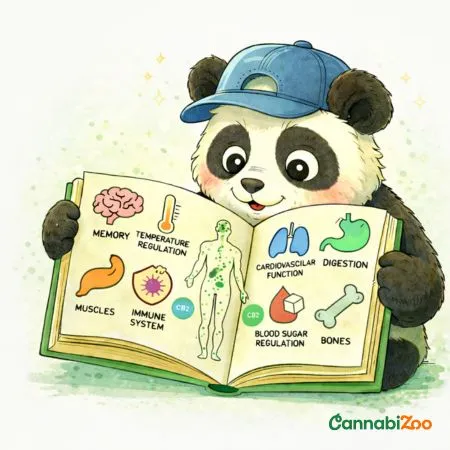
Why do we have cannabinoid receptors and how did they evolve? 🔎🧬
A simple evolutionary argument goes like this: if an organism retains an entire biological system—including ligands, receptors, and enzymes—over a very long period of evolution, it usually means that this system provides it with a certain advantage.
In the case of the ECS, it is assumed that this advantage is primarily related to the regulation of stress, energy metabolism, immunity, and reproduction.
📚 Review studies show that the endocannabinoid system influences the basic functioning of neural connections in the brain and helps adapt them to the organism’s current needs.
📚 Comparative studies across different species suggest that the mechanisms of the endocannabinoid system have very deep evolutionary roots.
CB1 and CB2 receptors likely arose during vertebrate evolution as a result of gene duplication and subsequent evolution.
However, it is not entirely clear exactly when these receptors appeared and in which organisms. Results may vary depending on the method used and the quality of the available genetic data.
Therapeutic targets and applications of the ECS in medicine 👨⚕️
Research on the ECS is gradually finding its way into medicine. Some approaches are already being used in practice, while others are still being explored.
What does this look like in practice? 👇
- Approved medications
There are clear applications 👇:
- Epidyolex (CBD): An approved medication in the EU for the treatment of certain forms of epilepsy.
- Sativex (THC + CBD): A spray used, for example, in patients with multiple sclerosis to alleviate spasticity.
- Areas where the ECS is applied
The ECS plays a role in several areas of medicine 👇:
- Pain and spasticity: There is evidence that cannabinoids may help alleviate pain or muscle tension, although the effect is typically mild to moderate.
- Psychiatry: CBD is being studied for its potential in treating anxiety or mood disorders.
In contrast, THC is associated with an increased risk of certain mental health issues (e.g., psychosis).
- Research Directions
New possibilities are currently being explored here 👇:
- FAAH inhibitors: The goal is to increase anandamide levels (and thereby influence ECS function). However, development is facing safety concerns.
- MAGL inhibitors: These focus on regulating 2-AG, but their use is currently limited and still in the research phase.
When the ECS is out of balance: CB1 activation vs. blockade ⚖️
The endocannabinoid system usually functions in balance. However, once it becomes imbalanced—whether toward excessive activation or blockade—it begins to affect both mental and physical processes.
- What happens when CB1 is too active?
For example, THC can cause excessive activation of CB1 receptors.
This can manifest as 👇:
- Changes in perception
- Impaired short-term memory
- In sensitive individuals, anxiety or psychological difficulties
- What happens when CB1 is blocked instead?
This was demonstrated, for example, by the drug rimonabant, which blocked the CB1 receptor.
Result 👇:
- It led to weight loss
- At the same time, it was associated with an increased incidence of depression and anxiety (which is why it was withdrawn from the market)
💡 What does this mean? Neither an “overactive” nor a “shut-down” system is ideal. The ECS functions best when it is in balance.
THC, CBD, CBG, and CBN: How They Affect the ECS 🌿
Different cannabinoids affect the endocannabinoid system in different ways. They differ in how they interact with receptors, what effects are observed, and how strong the scientific evidence is for them.
Below you’ll find an overview of cannabinoids (THC, CBD, CBG, and CBN) and current knowledge about their effects on the ECS 👇.
| Cannabinoid | Interaction with ECS | What research says | Quality of evidence |
|---|---|---|---|
| THC | Partial agonist of CB1 and also CB2 | Psychoactive effects; may influence pain or nausea; risk of cognitive and neuropsychiatric side effects with strong CB1 activation | Moderate for example pain, spasticity |
| CBD | Does not act directly on receptors; may indirectly influence the ECS and reduce CB1 activity; may increase levels of anandamide | Non-intoxicating; strong clinical evidence for some types of epilepsy (Epidyolex) | Strong for epilepsy, weaker elsewhere |
| CBN | Weaker agonist of CB1/CB2 | Often associated with sleep, but clinical data are still limited | Weak |
| CBG | Likely a partial agonist of CB2 | Mostly experimental data so far; early studies explore effects on stress, anxiety, or sleep | Weak to moderate |
ℹ️ Agonist = a substance that activates a receptor and triggers its effect.
For minor cannabinoids (e.g., CBG or CBN), most data is currently based on experimental studies or early clinical research, so the effects and dosages are far less well-studied than those of THC or CBD.
For CBG or CBN, a connection to non-intoxicating effects or sleep is often mentioned. From the perspective of ECS research, however, it is important to distinguish between two levels of understanding 👇:
- Receptor pharmacology: how a substance behaves on receptors or enzymes in laboratory experiments (in vitro).
- Clinical effect: what clinical studies (RCTs) actually show, including the doses used and the outcomes observed.
The endocannabinoid system: the foundation of harmony in the body 🧘♀️
The endocannabinoid system (ECS) is a natural communication system in the body that connects signaling molecules, receptors, and enzymes 🧩.
Its main task is simple: to help the body maintain balance.
Whether it’s stress, sleep, pain, or immunity, the ECS works to “fine-tune” the body’s responses so that everything functions as stably as possible.
In the brain, it acts as a delicate regulator of neural communication—it can dampen or amplify signals as needed. Beyond the brain, it also plays a role in processes such as inflammation, metabolism, and reproduction.
🔎 From a scientific perspective, this is a very ancient and important system that the body has retained throughout evolution because it helps it survive and adapt to change.
👨⚕️ In medicine, the ECS is coming to the forefront of interest mainly due to its role in regulating pain, inflammation, and neural activity.
One example of successful clinical use is CBD. The medicinal product Epidyolex has approved indications in the EU for selected forms of epilepsy.
However, experience shows that interventions in the ECS must be approached with caution. Some approaches have their limitations, and research is still ongoing.
Cannabinoids such as CBD, CBG, and CBN are also associated with the ECS and may interact with it, which is why they are the subject of intensive research.
Why is the ECS important for your body? 💚
What should you take away from this? 👇
The endocannabinoid system helps the body manage stress, inflammation, pain, and even falling asleep.
It’s not something “extra,” but a natural part of how the body functions, helping to maintain balance.
👉 When everything is working, you don’t even notice it.
👉 If the balance is disrupted, it can manifest as poorer sleep, increased sensitivity to stress, or mood swings.
You don’t need to know the names of enzymes or receptors. What’s important is to understand that the ECS is one of the key systems that influences how you feel every day 😊.
FAQ
1. What does the endocannabinoid system do?
The endocannabinoid system (ECS) helps maintain harmony in the body.
It plays a role in regulating processes such as stress, mood, pain, sleep, and immune responses. It works by “tuning” communication between cells as needed to keep everything running smoothly.
2. Why do people have endocannabinoid receptors?
Because without them, the ECS couldn’t function. The receptors (mainly CB1 and CB2) act as small “signal receivers” that capture messages from endocannabinoids. Thanks to them, the body is able to regulate neural communication, immune responses, metabolism, and even stress.
Evolutionarily speaking, the body has retained this system because it clearly helps it survive and function effectively.
3. When was the endocannabinoid system discovered?
The discovery of the ECS wasn’t a one-time “boom,” but rather a gradual exploration 🕵️.
It all began with cannabis research in the 1960s (THC), continued with the discovery of receptors in the late 1980s, and in the 1990s, key discoveries emerged—the first endocannabinoid (anandamide in 1992) and other components of the system. That’s when the whole picture finally started to come together.
4. What is the endocannabinoid system in the body for?
From a scientific perspective, there are several explanations 👇:
One proposed hypothesis suggests that the ECS functions as a “safe” signal modulator. Endocannabinoids are produced locally and break down quickly, so their effects are short-lived.
Another hypothesis emphasizes the connection between immunity and metabolism. Simply put 👇:
- CB1 is involved in regulating energy balance
- CB2 may help influence inflammatory responses
Together, they may help the body respond better to energy-demanding situations, such as infections or injuries, even though this involves a highly complex network of biological relationships.
5. How can I support the endocannabinoid system?
The body regulates the endocannabinoid system on its own, but you can indirectly influence its functioning through your lifestyle 👇:
- Getting enough quality sleep
- A balanced diet (especially healthy fats)
- Regular exercise
- Stress management
These habits help keep the entire system in balance 🧘♀️
In recent years, cannabinoids such as CBD, CBG, CBN, and others have also come to the forefront, as they can interact with the ECS and influence its functioning.
If you want to support your ECS and are struggling with insomnia or increased stress, you can try, for example:
ℹ️ However, research is still ongoing, and effects may vary depending on the individual and the product.
6. What is the endocannabinoid diet?
“Endocannabinoid diet” is not an official medical term or a separately defined dietary regimen 🥗. It refers more to a way of eating that can influence the functioning of the ECS—mainly through fat intake.
Endocannabinoids are produced from fatty acids (lipids), particularly omega-6 and omega-3. The ratio of these fats in the diet can influence their production as well as the overall activity of the system.
Research shows that 👇:
- omega-3 fatty acids are important for the proper functioning of the ECS and the brain
- a deficiency in them can disrupt endocannabinoid signaling
- a balanced ratio of omega-6 and omega-3 is important for regulating this system
It is therefore not a special diet, but a diet with sufficient high-quality fats and a balanced composition that supports the natural functioning of the ECS.
Sources:
- science.org/doi/10.1126/science.1470919
- bpspubs.onlinelibrary.wiley.com/doi/10.1038/sj.bjp.0707442
- pharmacologyonline.silae.it/files/archives/2005/vol2/3_Maccarrone.pdf
- nature.com
- nature.com/articles/346561a0
- nature.com/articles/384083a0
- nature.com/articles/365061a0
- nature.com/articles/35069076
- nature.com/articles/nn.2736
- diverdi.colostate.edu/C442/references/pharmacology/mol_pharma_1988_v34_p605.pdf
- sciencedirect.com
- sciencedirect.com/science/article/pii/S2352250X20301135
- sciencedirect.com/science/article/pii/S2215036619300483
- sciencedirect.com/science/article/pii/S1074552107003997
- sciencedirect.com/science/article/pii/S1878747923008036
- jbc.org/article/S0021-9258%2820%2974857-X/fulltext
- rupress.org/jcb/article-abstract/163/3/463/33788/Cloning-of-the-first-sn1-DAG-lipases-points-to-the?redirectedFrom=fulltext
- pnas.org/doi/full/10.1073/pnas.152334899
- pubs.acs.org/doi/abs/10.1021/ja01062a046
- molpharm.aspetjournals.org/article/S0026-895X%2825%2909876-1/abstract
- jneurosci.org/content/11/2/563
- pmc.ncbi.nlm.nih.gov/articles/PMC1337978
- link.springer.com/article/10.1007/s00213-001-0946-5
- ema.europa.eu/en
- ema.europa.eu/en/documents/medicine-qa/questions-and-answers-recommendation-suspend-marketing-authorisation-acomplia-rimonabant_en.pdf
- ema.europa.eu/en/documents/product-information/epidyolex-epar-product-information_en.pdf
- rep.bioscientifica.com/view/journals/rep/152/6/R191.xml
- pp.jazzpharma.com/pi/sativex.ie.SPC.pdf
- jamanetwork.com/journals/jama/fullarticle/2338251
- bmj.com/content/374/bmj.n2040
- europepmc.org/article/PMC/3316151
- sukl.gov.cz/wp-content/uploads/2025/02/DELTA-9-TETRAHYDROCANNABINOL-AND-CANNABIDIOL-PAR-46-1.pdf
- nejm.org/doi/10.1056/NEJMra1402309
- mdpi.com
- intechopen.com/chapters/50397
Author: Patricie Mikolášová
Photo: AI
“All information provided on this website, as well as information provided through this website, is for educational purposes only. None of the information contained herein is intended to be a substitute for a medical diagnosis and should not be considered medical advice or recommended treatment. This website does not endorse, condones or advocate the licit or illicit use of narcotic drugs or psychotropic substances or the commission of any other illegal activity. For more information, please see our Disclaimer.”
Recommended products4

Nature Cure Full Spectrum Raw CBD Oil - 10 %, 10 ml, 1000 mg

Cannaline CBD Tablets with Bcomplex, 1800 mg CBD, 30 x 60 mg

Nature Cure Broad Spectrum CBN Oil - 5% CBN a 2,5% CBD, 500:250 mg, 10 ml